





 Destinations
There is a word the Maasai use for the Serengeti. Siringet. It means the land that runs on forever. Stand on the roof of a safari vehicle at sunrise in the central Seronera Valley, with golden grass stretching to every horizon and the silhouettes of acacia trees breaking the skyline, and you will understand immediately why they chose that word. The Serengeti does not feel like a place with edges. It feels like the world before the world had edges.
Tanzania’s most famous national park covers 14,763 square kilometres of northern Tanzania, making it one of the largest protected areas in Africa. But size alone does not explain what makes the Serengeti extraordinary. What makes it extraordinary is that it is alive in a way that very few places on earth still are. The wildlife here does not exist in pockets or corridors. It moves freely across a vast ecosystem that stretches north into Kenya’s Maasai Mara, following the rains, the grass and the ancient instincts that have governed this landscape for millions of years.
The Serengeti is the last place on earth where you can witness wildlife at a genuinely prehistoric scale. And at the centre of that scale is the migration.
The Great Migration
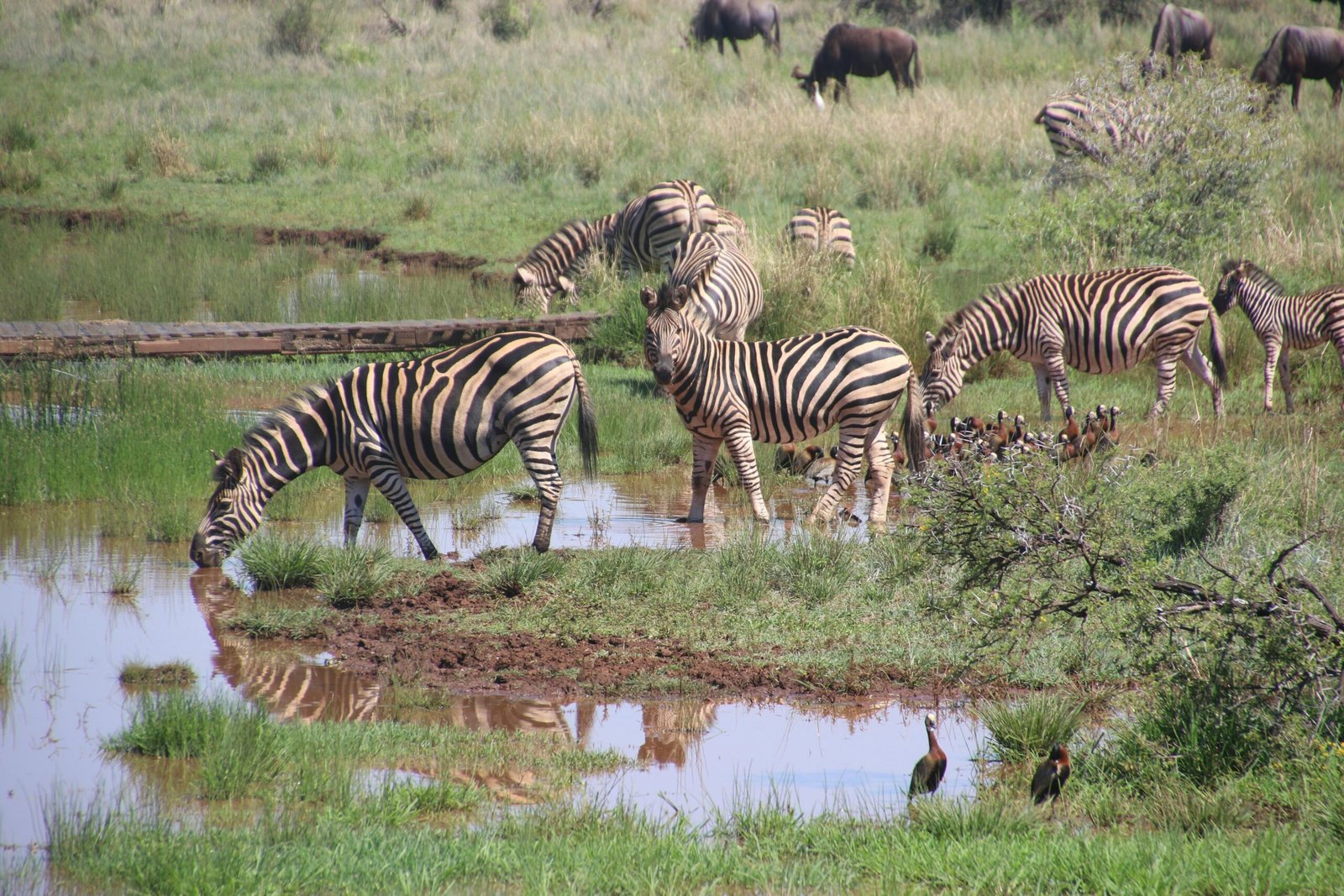
The wildebeest migration is the greatest wildlife spectacle on earth. Over 1.5 million wildebeest, 200,000 zebras and hundreds of thousands of gazelles move in a continuous loop around the Serengeti Mara ecosystem, following the seasonal rains in search of fresh grass. The loop never stops. There is no beginning and no end. The animals are always somewhere in the system, always moving, always followed by the predators that depend on them.
The migration’s most dramatic moment happens at the Mara River between July and October, when the wildebeest must cross from Tanzania into Kenya. The river is full of Nile crocodiles. The banks are steep and slippery. The wildebeest do not want to cross. But the grass on the other side is green and they have no choice. What follows is one of the most chaotic, visceral and extraordinary things in the natural world. Thousands of animals plunging into a crocodile filled river, scrambling up muddy banks, some making it and some not, while lions wait on the far side and vultures circle above.
If you are in the Serengeti between July and October, position yourself near the Mara River and wait. It is worth every hour of waiting.
Outside migration season the Serengeti is far from empty. The central Seronera Valley holds large lion prides, leopards draped over acacia branches and cheetah families raising cubs on open ground year round. The southern short grass plains around Ndutu are extraordinary between December and March when wildebeest calving season begins and cheetahs, wild dogs and hyenas converge on the plains to take advantage. The western corridor along the Grumeti River offers its own dramatic crossing between May and July before the herds move north.
The Serengeti rewards visitors in every season. The question is not whether to go. The question is which part of the ecosystem to be in and when.
The Zones
The Serengeti is large enough that different zones offer genuinely different experiences and understanding the geography helps you plan a better trip.
The central Seronera Valley is the most accessible and most visited part of the park. It sits at the heart of the ecosystem and offers year round wildlife viewing with the highest concentration of predators in the park. If you have limited time this is where you want to be.
The southern short grass plains stretch south from Seronera toward the Ngorongoro Conservation Area. This is calving season territory from December to March, when hundreds of thousands of wildebeest give birth in a short window and the predator action is relentless. The plains are also prime cheetah and wild dog habitat with open ground that makes spotting and photographing them far easier than in busier vegetation.
The northern Mara River zone is remote, less visited and home to the famous river crossings between July and October. The wildlife density here during migration season is extraordinary and the camps in the northern Serengeti tend to be smaller and more exclusive than those in the south.
The western corridor along the Grumeti River offers a different landscape, more wooded and varied than the open plains, with its own river crossing spectacle in May and June before the herds move north. Giant Nile crocodiles in the Grumeti River are among the largest in Africa.
The Wildlife
The Serengeti is home to all of Africa’s iconic species and many of its rarest. Lions are the park’s most visible predator with an estimated 3,000 resident across the ecosystem. Large prides of up to 30 individuals are not unusual in Seronera and the lions here are remarkably relaxed around vehicles, going about their lives with a complete indifference to being watched.
Leopards are harder to find but consistently present in the riverine forest along the Seronera River, where they drape themselves over acacia branches in the heat of the day. Cheetahs are easiest to spot on the open southern plains where their habit of using termite mounds as lookout points makes them visible from a distance. Wild dogs, one of Africa’s most endangered predators, pass through the Serengeti seasonally and a sighting is always considered a privilege.
Elephants move through the park in large family groups, particularly in the western corridor and around the permanent water sources. Giraffes, zebras, buffaloes, topis, impalas, elands and Grant’s gazelles fill the plains in numbers that feel genuinely biblical. Over 500 bird species have been recorded in the Serengeti including the secretary bird, kori bustard, lilac breasted roller and numerous raptor species.
The Serengeti’s predator to prey ratio is one of the highest on earth. On a good game drive day in Seronera it is not unusual to see lions, leopards and cheetahs all in the same morning.
Getting There
The Serengeti is accessed via two main entry points. Most visitors fly into Kilimanjaro International Airport near Arusha in northern Tanzania and either drive or take a light aircraft into the park. The drive from Arusha to the central Serengeti takes approximately eight hours through Ngorongoro Conservation Area, passing the crater rim on the way in. It is a spectacular drive but a long one.
Light aircraft connections between Arusha, the various Serengeti airstrips and Ngorongoro are available daily and are the preferred option for luxury itineraries. Flight time from Arusha to Seronera is approximately one hour.
Where to Stay
The Serengeti has accommodation options across every budget tier from basic public campsites to some of the most exclusive safari camps in Africa. The best camps in the northern Serengeti are small, remote and positioned specifically for the migration season. Central Seronera has a wider range of options year round.
Ruhuuka Travels’ Serengeti Great Migration package uses luxury tented camps that combine comfort with genuine wilderness immersion. You are in the bush, not insulated from it.
What to Bring
Neutral coloured lightweight clothing is essential for game drives. Early mornings in the Serengeti can be surprisingly cold so bring a warm layer. A good camera with a long lens will serve you well. Binoculars are worth every gram of luggage space. Sunscreen, insect repellent and a hat are non negotiable.
Final Thought
The Serengeti changes people. Not dramatically or immediately, but quietly and permanently. You come back from it with a different sense of scale, a different understanding of what the natural world is capable of when it is left alone and a different relationship with your own place within it.
Siringet. The land that runs on forever.
It lives up to the name.
