





 Culture
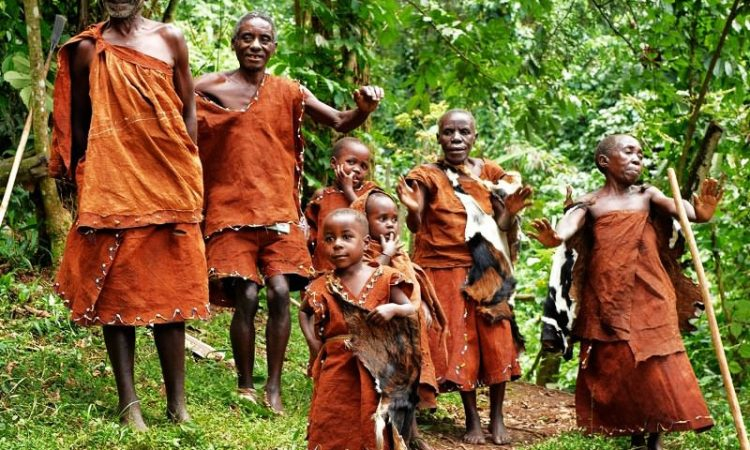
There is a moment during a Batwa cultural experience in Bwindi when a Batwa elder picks up a handful of forest soil, holds it to his nose and inhales slowly. He does not explain what he is doing. He does not need to. The forest is not just where the Batwa came from. For most of their history it was everything they were.
The Batwa are one of the oldest indigenous communities in Africa. Archaeological evidence suggests their ancestors have lived in the Great Lakes region of Central Africa for at least 60,000 years, making them among the earliest known inhabitants of this part of the continent. For the vast majority of that time they lived entirely within the forest, hunting with bows and arrows, gathering wild fruits and honey, building temporary shelters from forest materials and moving through the trees with a knowledge so deep and so detailed it took generations to accumulate.
They called themselves the keepers of the forest. Not metaphorically. Literally. The Batwa understood the forest as a living entity that needed to be known, respected and cared for. They could read its signs, predict its weather, follow its animals and find food and medicine within it that no outsider would recognise. The forest fed them, sheltered them and defined them completely.
In 1991 that relationship was severed overnight.
When Uganda’s government gazetted Bwindi Impenetrable Forest as a national park in 1991, primarily to protect the mountain gorillas living within it, the Batwa were evicted from the forest they had inhabited for millennia. They received no land, no compensation and no preparation for life outside the trees. Overnight a community that had never needed money, never farmed, never built permanent structures and never interacted with the outside world on its own terms was pushed to the edges of a society that did not know them and did not particularly want to.
The consequences were devastating. Stripped of their forest and their way of life, the Batwa became one of Uganda’s most marginalised communities. Rates of poverty, malnutrition, landlessness and discrimination against them are among the highest in the country. Many Batwa communities still live on the margins of the parks that displaced them, surviving on casual labour and the goodwill of neighbouring Bakiga and Bafumbira farmers.
But the story does not end there.
In recent years cultural tourism has opened a new chapter for some Batwa communities around Bwindi and Mgahinga. Through carefully managed cultural experiences, visitors can spend time with Batwa elders and community members learning about their traditional forest life, medicinal plant knowledge, hunting techniques, honey gathering practices and oral traditions. The experiences are led by the Batwa themselves and the income generated goes directly to participating communities.
These are not performances put on for tourists. They are living transmissions of knowledge that the Batwa are determined not to lose. The elders who lead the experiences grew up inside the forest. They remember it with a specificity and an intimacy that is genuinely extraordinary to witness. When they walk you through the forest’s edge and name every plant, describe every use and tell you the stories attached to each one, you are receiving knowledge that took tens of thousands of years to accumulate.
The Batwa cultural experience at Bwindi is one of the most moving things you can do in Uganda. Not because it is dramatic or entertaining, though it is both of those things, but because it puts you face to face with a community that lost everything and is still here, still carrying its knowledge, still teaching it and still asking the world to pay attention.
If you trek gorillas in Bwindi, make time for the Batwa. The gorillas will change how you see animals. The Batwa will change how you see people.
